Word Crush® - Fun Puzzle Game
- 4.7
- Rating
- 10.00M
- Installs
- Free
- Price
 Analysis by App-foxy
I spent time with Word Crush® as a quick word-puzzle game, and my first impression was that it understands the appeal of short sessions. You can pick it up when you have a spare moment, solve a few challenges, and put it down without needing to remember a complicated story or a long chain of objectives. That makes it an easy recommendation for people who enjoy word games but do not want a demanding daily commitment.
It is developed by FUNJOY and sits firmly in the casual word and brain-puzzle space. The game is free to install, aimed at Everyone, and has built a large audience, with more than ten million installs and a 4.7 average from roughly 241 thousand ratings. Those figures suggest that its basic format has broad appeal, but they do not automatically make it right for every player. In my experience, the real question is whether you like finding words through repeated, focused play rather than chasing a deep narrative or a highly competitive leaderboard.
How Word Crush feels during quick and extended sessions
I find Word Crush most useful when I treat each visit as a small, self-contained pause rather than a session I need to stretch. That makes it easier to notice whether I’m still solving thoughtfully or just tapping through from habit. In the next section, I’ll look at how the game’s feedback can keep that short loop satisfying—and where repetition can start to dull it.
You May Also Like

 Blood Strike: 2.5 Anniversary
Blood Strike’s Loadouts Turn Every Drop Into a Tactical Gamble
A close look at Blood Strike’s custom loadouts: how fast access to signature weapons reshapes its battle royale rhythm, rewards preparation, and narrows the gap between fights.

 Pandora - Music & Podcasts
Pandora’s Music Is Easy to Start, but Harder to Recover
Pandora’s strength is its low-effort path from a seed to a station. Its weak spot is how much confidence it asks you to place in connection, setup, and quiet recovery.

 8 Ball Pool
 Is Built on Rivalries, Rematches, and Routine
A close look at the rivalries, rematches, shared routines, and unanswered safety questions that turn a quick pool match into a persistent mobile community.

 Samsung Music
’s Quiet Strength Is Playing What You Already Own
Its reach comes less from spectacle than from dependable access to a personal library. That simplicity is both the app’s strongest retention engine and its ceiling.

 AccuWeather: Weather Radar
AccuWeather Review: A Quick, Clear Forecast for Everyday Decisions
For everyday plans, the best forecast is the one you can understand quickly. AccuWeather makes rain timing, radar, and local conditions easy to act on, with a few trade-offs.

 Hill Climb Racing
Why Hill Climb Racing Still Turns Crashes Into One More Run
A tiny car, a bumpy hill and one more upgrade: Hill Climb Racing keeps resurfacing because its simple chaos makes every near-miss feel personal.
More From Our News Desk



A fast format that suits spare minutes
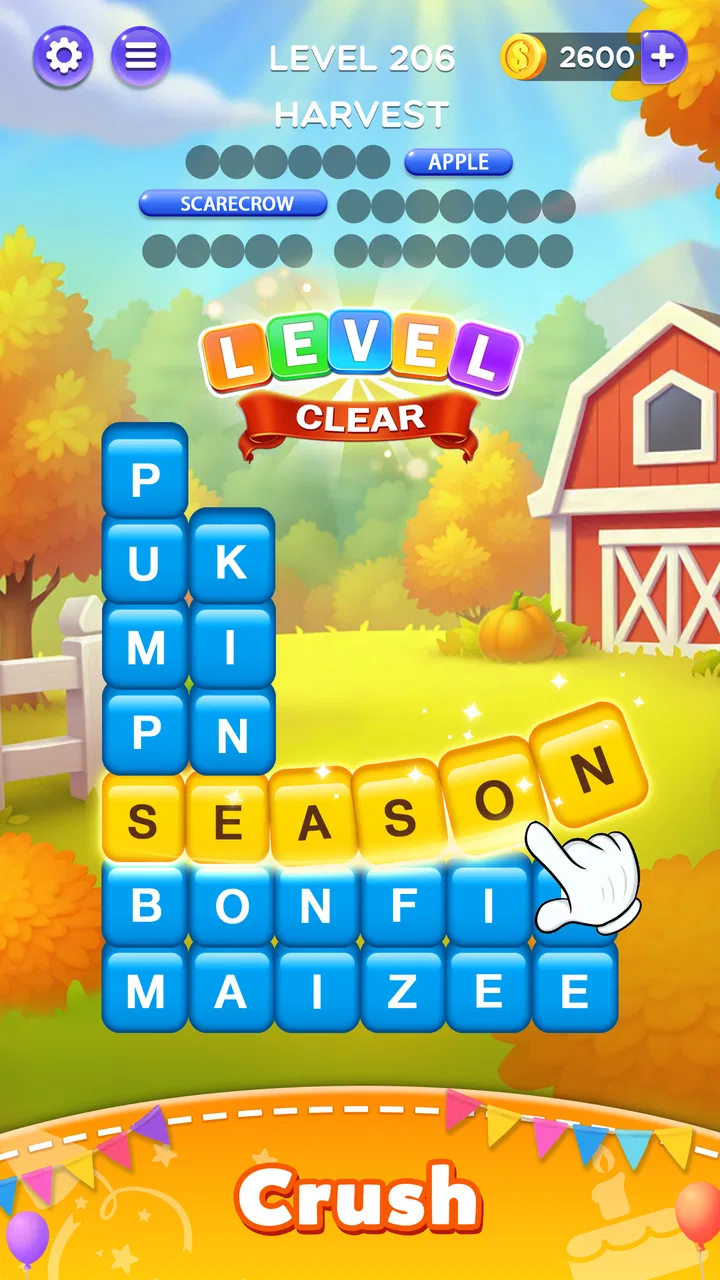
The strongest part of the experience is its suitability for small gaps in the day. I can imagine opening it while waiting for an appointment, taking a short break from work, or relaxing before bed. A word puzzle does not require the same mental preparation as a strategy game, and the compact nature of the challenges makes the opening barrier pleasantly low.
That perceived speed matters more here than raw technical performance. The game’s appeal depends on moving from one puzzle to the next without making the player feel trapped in a lengthy setup. When I want a few minutes of mental activity, I prefer a game that lets me start thinking almost immediately. This is where the simple word-focused design works in its favor.
It is also a better fit for players who enjoy a clear rhythm: inspect the available letters, test possible combinations, notice patterns, and continue. The satisfaction comes from recognition rather than from managing several systems at once. If you prefer games with elaborate menus, character development, or a large strategic map, this may feel intentionally modest rather than exciting.
What happens when you play for longer
Longer sessions reveal both the strength and the limitation of the format. The low-friction design makes it easy to continue, but the mental activity can become repetitive if you play for a long stretch. I found that the game works best when treated as a series of short exercises instead of an all-evening marathon.
For heavy use, I would approach it in rounds. Playing until I notice that I am guessing rather than reasoning is a useful stopping point. That habit keeps the puzzles enjoyable and avoids turning a relaxing activity into a frustrating search for one stubborn answer. The game is especially useful as a reset between demanding tasks, because it occupies attention without requiring a major time investment.
One practical tip is to use a short session as a warm-up for concentration. Rather than opening it only when bored, I would play a few puzzles before reading, studying, or returning to a task that needs patience. The word-search process gives the mind something specific to focus on, although I would not treat it as a formal learning tool or a substitute for structured language practice.
How it compares with familiar word-game alternatives
Compared with a traditional crossword app, this game feels more approachable when I want immediate progress. Crosswords usually ask me to work from clues, interpret wording, and maintain several answers at once. Word Crush® puts more emphasis on spotting possible words from the material in front of me, so the experience feels less like solving a newspaper puzzle and more like a quick visual challenge.
It also differs from a spelling or vocabulary study app. Those tools are usually better when the goal is deliberate instruction, definitions, pronunciation, or measurable language improvement. Here, the main reward is the act of solving. I would choose this game for casual brain exercise and choose a learning-focused alternative when I need explanations or a planned curriculum.
Compared with an endless word scramble, the structured puzzle progression gives the session a clearer sense of direction. The trade-off is that players who want unlimited creative freedom may find the experience more controlled. This is a game for people who enjoy discovering the intended solution, not for those who want to build their own word lists or write freely.
Stability and recovery in ordinary use
From a practical perspective, I judge a casual game by how little effort it demands outside the puzzles themselves. Word Crush® benefits from having a focused purpose: open it, play, and leave. That simplicity makes it easier to return to than a game that requires several steps before the main activity begins.
Recovery is particularly important for short-session games. If I am interrupted by a message, a conversation, or a change in plans, I want to be able to return without feeling that I have lost the whole point of the session. The puzzle format is naturally more forgiving than a timed multiplayer match or a long story sequence. Even when I stop unexpectedly, the activity does not create the same pressure to resume immediately.
I would still avoid assuming that every device or situation will feel identical. Performance can vary with the phone, the operating system, available storage, and whatever else is running in the background. The game supports Android seven point zero and later, while the current version is 4.0.3, so anyone using an older phone should check compatibility before planning around it.
Resource expectations and device limitations
There is no reason for me to approach this as a graphics-heavy game. Its main demand is the player’s attention, not a large visual world or complex action system. That makes it a sensible candidate for people who want a lighter type of entertainment, especially on a phone that is used mostly for messaging, browsing, and everyday tasks.
Still, “light” should not be confused with universally effortless. Older hardware can make any app feel slower when storage is crowded or many other applications are active. If a phone already struggles with basic transitions, I would keep expectations realistic. The game’s puzzle format may be undemanding compared with a modern action title, but the overall experience still depends on the condition of the device.
For someone choosing between this and a visually ambitious game, the decision is straightforward: Word Crush® is the more practical choice when battery awareness, quick access, and mental rather than graphical stimulation matter most. For someone who wants rich animation, immersive sound, or a sense of physical exploration, the lower resource profile may also mean a less exciting experience.
Free access and the role of purchases
The game is free, which lowers the risk of trying it. That matters for casual players who are unsure whether this particular style of word puzzle will hold their attention. I would install it with the expectation that the core appeal is easy to sample before deciding whether it deserves a regular place on my phone.
There are in-app purchases ranging from forty-nine cents to ninety-nine dollars and ninety-nine cents per item. That wide range is worth keeping in mind before spending. My advice is to play naturally first and decide whether any optional purchase genuinely improves your routine. A free word game should remain a small part of a phone budget, not something that encourages impulse buying during a difficult puzzle.
Parents may also appreciate that the content rating is Everyone, but an age rating does not replace sensible device supervision. If a child uses the game on a shared phone, I would still review purchase settings and make sure accidental transactions are not easy. That is a practical precaution for any free game with optional paid items.
Who will get the most from it
I think it is a strong match for adults who like word challenges but want a relaxed pace, commuters looking for a compact distraction, and players who enjoy building a small daily habit. It can also suit someone returning to mobile games after a long break because it does not demand familiarity with a fictional universe or a complicated control scheme.
It is less suitable for players who need detailed explanations for every answer, formal vocabulary lessons, or a strong competitive scene. It may also disappoint people who lose interest when a puzzle structure repeats. If your ideal game is a crossword with layered clues, a multiplayer word battle, or a story-driven adventure, another option will probably serve you better.
One realistic use case is a short evening routine. I might play a few puzzles after putting away work, then stop before the session becomes tiring. That gives the brain a defined activity without turning relaxation into another obligation. Someone else might use it during a lunch break, but I would avoid playing while walking, crossing streets, or doing anything that needs full attention.
Small habits that improve the experience
I found that patience is more useful than immediately trying every possible combination. Looking for familiar word patterns first can reduce random tapping and make the solving process feel more deliberate. When I get stuck, taking a brief pause often works better than staring at the same letters continuously.
Another useful approach is to separate entertainment from performance. I would not judge a session only by how quickly I finish. Some puzzles are enjoyable precisely because they make me reconsider an obvious assumption. Treating the game as a concentration exercise rather than a test of intelligence keeps the experience more comfortable.
It is also worth deciding in advance how long a session should last. Because the format is easy to continue, a simple personal limit can prevent the game from taking over a break that was meant to be short. This is one of the less obvious trade-offs of accessible puzzle design: the same convenience that makes the game easy to start can make it easy to overplay.
My overall view after using it
Word Crush® succeeds because it keeps its central activity understandable and accessible. The game does not need to overwhelm me with systems to provide a useful few minutes of concentration. Its strongest qualities are the quick entry into play, the suitability for interruptions, and the fact that it can fit naturally into a daily routine.
Its limitations are just as clear. The format may feel repetitive during long sessions, it is not a replacement for a serious crossword or language-learning tool, and optional purchases mean that free installation should still be followed by sensible spending habits. Players seeking dramatic presentation or deep progression should look elsewhere rather than expecting this compact word game to become something it is not.
FUNJOY has kept the focus on casual word solving, and the continuing audience reflects how well that basic idea works for many people. With a 4.7 average and around 41 thousand written reviews, it has earned substantial approval, while its age rating makes it broadly approachable. I would recommend trying it if you want a free, low-pressure way to fill short pauses with a little mental effort.
My final verdict is positive, with one condition: use it as a short, repeatable puzzle break rather than as an endlessly demanding main game. On a compatible device running Android seven point zero or newer, it should appeal most to players who value convenience and clear goals. The best reason to install it is not that it promises everything, but that it makes a small amount of word-focused play easy to fit into real life.
FAQs for Word Crush® - Fun Puzzle Game
01What is the main objective of Word Crush® - Fun Puzzle Game?
The main objective of Word Crush® is to challenge players to find hidden words from a jumbled set of letters. As you progress, the puzzles become increasingly complex, testing your vocabulary and problem-solving skills. It’s a fun and engaging way to improve your word recognition and cognitive abilities.
02Is Word Crush® - Fun Puzzle Game free to download and play?
Yes, Word Crush® is free to download and play. However, like many mobile games, it offers in-app purchases that can enhance your gameplay experience, such as hints or removing ads. These purchases are optional, and you can enjoy the game fully without spending any money.
03What platforms is Word Crush® available on?
Word Crush® is available on both Android and iOS platforms. You can download it from the Google Play Store for Android devices and the Apple App Store for iOS devices. This ensures that a wide range of users can enjoy the game regardless of their preferred mobile device.
04What are some features that make Word Crush® unique?
Word Crush® offers unique features such as a vast number of levels, daily challenges, and themed puzzles. The game also provides a visually appealing interface with colorful graphics and smooth animations, enhancing the overall gaming experience. Additionally, it supports multiple languages, making it accessible to a global audience.
05Are there any age restrictions for playing Word Crush®?
Word Crush® is designed to be family-friendly and suitable for all ages. However, due to its in-app purchase options, it is recommended for players aged 4 and above. Parents should supervise young children to ensure a safe and enjoyable gaming experience without unintended purchases.
Pros
- Engaging gameplay with vibrant graphics.
- Simple mechanics suitable for all ages.
- Regular updates with new levels.
- Free to play with optional in-app purchases.
- Encourages vocabulary building.
Cons
- Contains ads that interrupt gameplay.
- Some levels may feel repetitive.
- Limited hints without purchase.
- Requires internet for some features.
- In-app purchases can be costly.

Word Crush® - Fun Puzzle Game
Gallery